



BY: Kassim Kajosolo
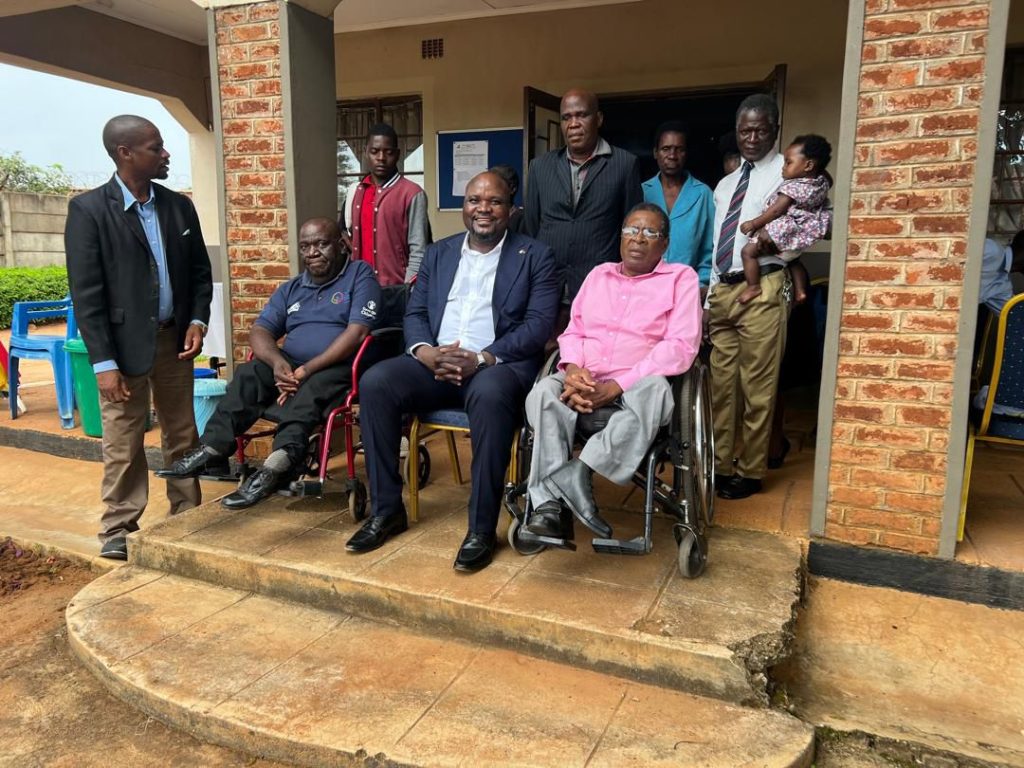
Members of district committees for the Association of Persons with Physical Disabilities in Malawi (APPDM) have been equipped with critical knowledge and advocacy skills to defend and promote the rights of persons with disabilities, following a capacity-building training on the newly enacted Persons with Disabilities Act of 2024.
The training brought together APPDM district committee members from Salima, Nkhata Bay, Chikwawa and Blantyre.
APPDM is one of the Organisations of Persons with Disabilities (OPDs) affiliated to the Federation of Disability Organisations in Malawi (FEDOMA). The initiative aimed at strengthening grassroots disability rights activism by deepening participants’ understanding of the new disability law and how it can be practically utilised to address rights violations.
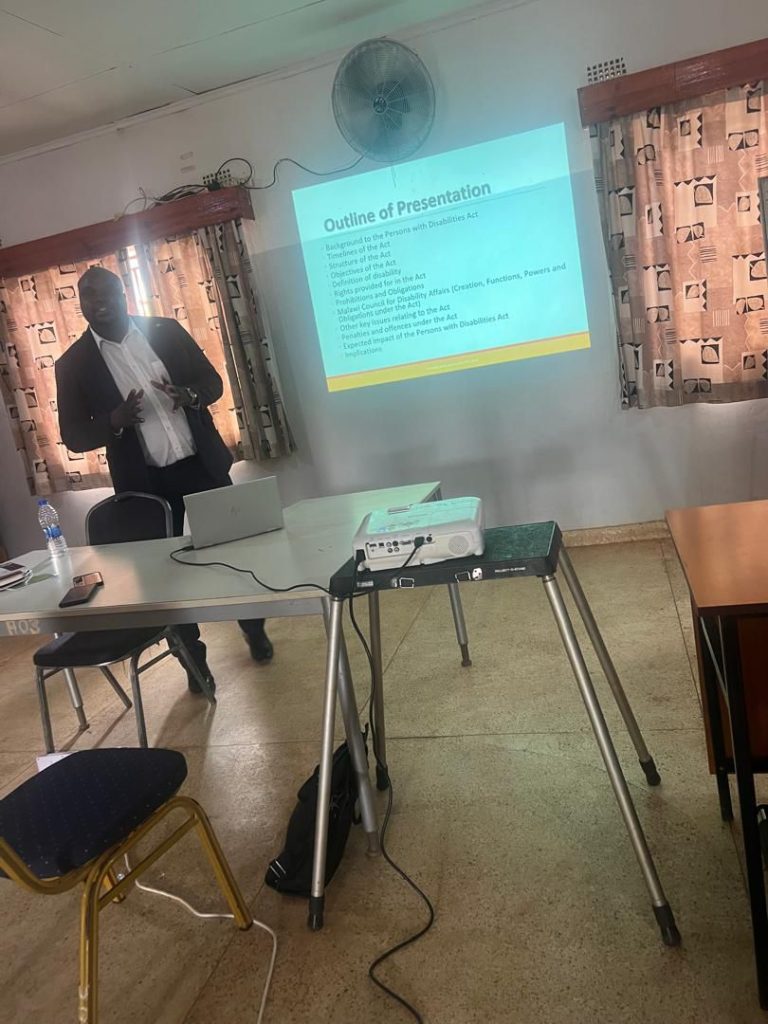
Facilitating the training, disability rights advocate George Chiusiwa emphasised that the effectiveness of the Persons with Disabilities Act depends largely on how well persons with disabilities and their representative organisations understand and use it.
“A law on its own does not change lives. It only becomes meaningful when rights holders understand it and are able to use it to demand accountability from duty bearers,” said Chiusiwa.
The Persons with Disabilities Act, 2024, harmonises disability-related legislation in Malawi and provides a strong legal framework for the protection and promotion of disability rights.
However, Chiusiwa noted that limited awareness of enforcement mechanisms remains a major challenge.
“OPDs must clearly understand the enforcement mechanisms, complaint procedures and institutions responsible under the Act. Without this knowledge, persons with disabilities cannot effectively challenge discrimination or abuse,” he said.
A key component of the training focused on the role of the Malawi Council for Disability Affairs (MACODA), which is mandated to protect the rights of persons with disabilities and oversee the implementation of the Act.
Participants were guided on how MACODA operates, how complaints can be lodged, and how OPDs can engage the council at district level.
Beyond legal literacy, the training equipped participants with practical advocacy, lobbying and awareness-raising strategies aimed at strengthening disability rights protection at the local level.
Organisers said the goal is to empower district-level disability structures to engage duty bearers in identifying gaps, barriers and challenges that hinder the enjoyment of fundamental rights and freedoms by persons with disabilities.
Participants were also oriented on the National Disability Policy of 2025, launched by government last year, which serves as a critical framework for planning, coordination, resource mobilisation, implementation and monitoring of disability programmes across all sectors of development in Malawi.
The policy is expected to support effective implementation of the Act and promote disability mainstreaming as the country strives for an inclusive society.
Meanwhile, the Executive Director of APPDM expressed concern that many rights violations persist because people with disabilities are unaware of the law meant to protect them.
He cited cases where minibus operators demand extra payment for wheelchairs, describing the practice as discriminatory.
“A wheelchair is part of the person, not extra luggage,” he said. “The Act gives us room to sue over the atrocities we face, but many people do not know where to report or seek justice. We are suffering simply because we do not know the law.”
Participants were urged to cascade the knowledge gained to other persons with disabilities in their districts to ensure wider awareness of the Act.
Organisers expressed hope that the training will translate into stronger grassroots advocacy, reduced violations and improved protection of disability rights across Malawi.
The training was funded by Disability Rights Fund